
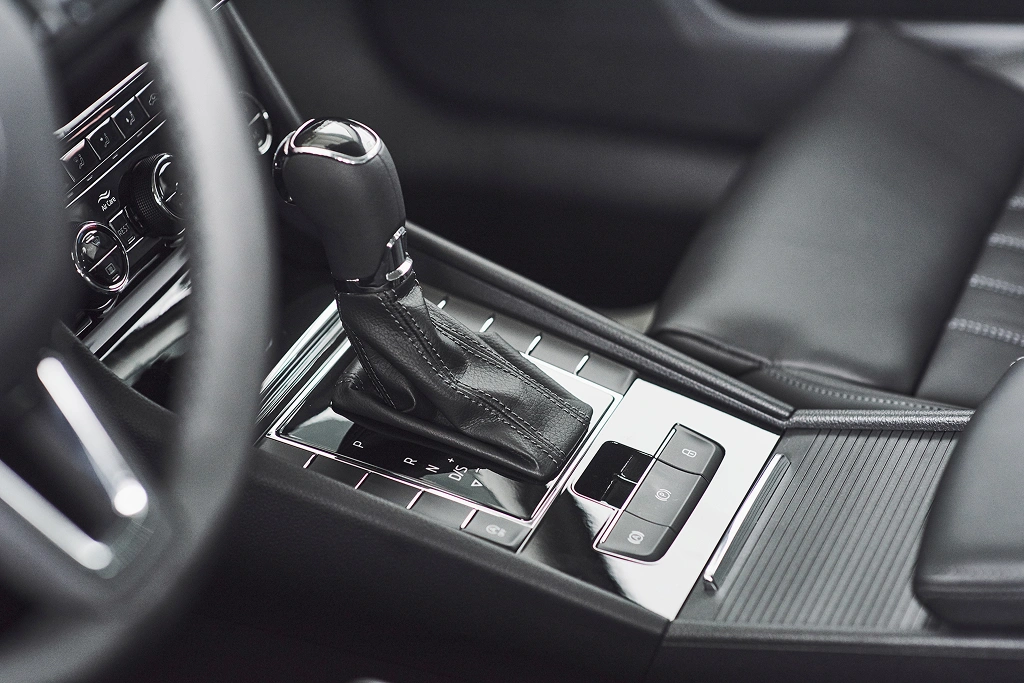
For most of automotive history, choosing a car’s transmission was a simple trade-off: you chose the manual for performance and fuel economy, or the automatic for comfort and ease of use. Today, that boundary has vanished. Modern automatics often outperform manuals in both speed and efficiency, yet the manual transmission continues to hold a devoted, if shrinking, following.
Choosing between the two today requires looking beyond just “how to drive.” It involves an analysis of your daily environment, your long-term maintenance budget, and the specific technology under the floorboards.
The Modern Landscape of Gearboxes
To make an informed choice, you must first realize that “automatic” no longer means just one thing. There are traditional torque-converter automatics (highly reliable and smooth), Dual-Clutch Transmissions or DCTs (lightning-fast shifts found in sports cars and Volkswagens), and Continuously Variable Transmissions or CVTs (found in many Hondas, Toyotas, and Nissans).
The manual transmission, by contrast, remains mechanically simple. A pedal, a stick, and a physical connection between you and the gears. While the automatic uses computers and hydraulic fluid to decide when to shift, the manual relies entirely on human input.
Pros and Cons: The Driving Experience
The automatic’s primary advantage is convenience. In heavy urban traffic, the constant “clutch-in, shift, clutch-out” of a manual can be exhausting. Automatics allow for a smoother commute and enable modern safety features like adaptive cruise control, which can bring a car to a full stop and start again without driver intervention.
The manual transmission’s advantage is engagement and control. On a winding backroad, a manual allows you to choose exactly when you want power. There is also a secondary benefit: theft deterrence. In many regions, the inability of younger generations to drive a stick shift acts as a built-in security system.
Long-Term Maintenance Costs
From a financial perspective, the manual transmission is almost always cheaper to maintain over the life of the vehicle, provided the driver knows how to use it. The most common “repair” for a manual is a clutch replacement, which typically occurs every 60,000 to 100,000 miles and costs between $800 and $1,500.
Modern automatics are vastly more complex. A total transmission failure in a modern 8-speed or 10-speed automatic can cost $4,000 to $7,000 to replace. Furthermore, while many manufacturers claim their automatic transmissions have “lifetime fluid,” most mechanics recommend a fluid flush every 40,000 to 60,000 miles to prevent internal wear—a service that is more expensive than a simple manual gear oil change.
Performance and Fuel Efficiency
Historically, manuals were faster and more fuel-efficient because automatics suffered from “parasitic loss”—power lost in the thick hydraulic fluid. Modern technology has reversed this.
Contemporary automatics have more gears (up to 10) than a standard 6-speed manual, allowing the engine to stay in its most efficient power band. Computers can now shift in milliseconds—far faster than any human. As a result, the “automatic version” of a modern car often gets 1-3 more miles per gallon than its manual counterpart.
Resale Value and Availability
This is where the manual transmission hits a wall. In the United States and many parts of Asia, manuals make up less than 2% of new car sales. This makes them harder to find on the used market.
While a manual might have a higher resale value to a specific enthusiast, for the general public, it is a liability. Most buyers do not want to—or cannot—drive them. If you plan to sell your car in five years to a broad audience, the automatic is the safer financial bet. However, if you are buying a sports car, the manual may hold its value better because of its “collector” status.
Practical Insights: Which Should You Choose?
When deciding, consider these three factors:
- The Commute: If you spend more than 30 minutes a day in stop-and-go traffic, you will likely regret the manual within a month.
- The Learning Curve: If you don’t already know how to drive a manual, don’t buy one as your only car. The stress of learning in traffic can lead to premature clutch wear.
- The Technology: If the car you want uses a CVT (Continuously Variable Transmission), research that specific model’s reliability. Some CVTs have higher failure rates than traditional automatics.
Summary
The “Manual vs. Automatic” debate is no longer about which is better, but which fits your lifestyle. The automatic offers effortless modern performance and higher resale appeal. The manual offers mechanical simplicity, lower long-term repair costs, and a level of driver involvement that no computer can replicate. For the first-time buyer, the automatic is the logical choice, but the manual remains the emotional one.
